
Can I Stop Blood Pressure Medication If My Reading Is Normal?
A normal blood pressure reading while taking medication usually means the treatment is working, not that hypertension is cured. Here’s why stopping suddenly is risky, and how to discuss safer changes with your doctor.
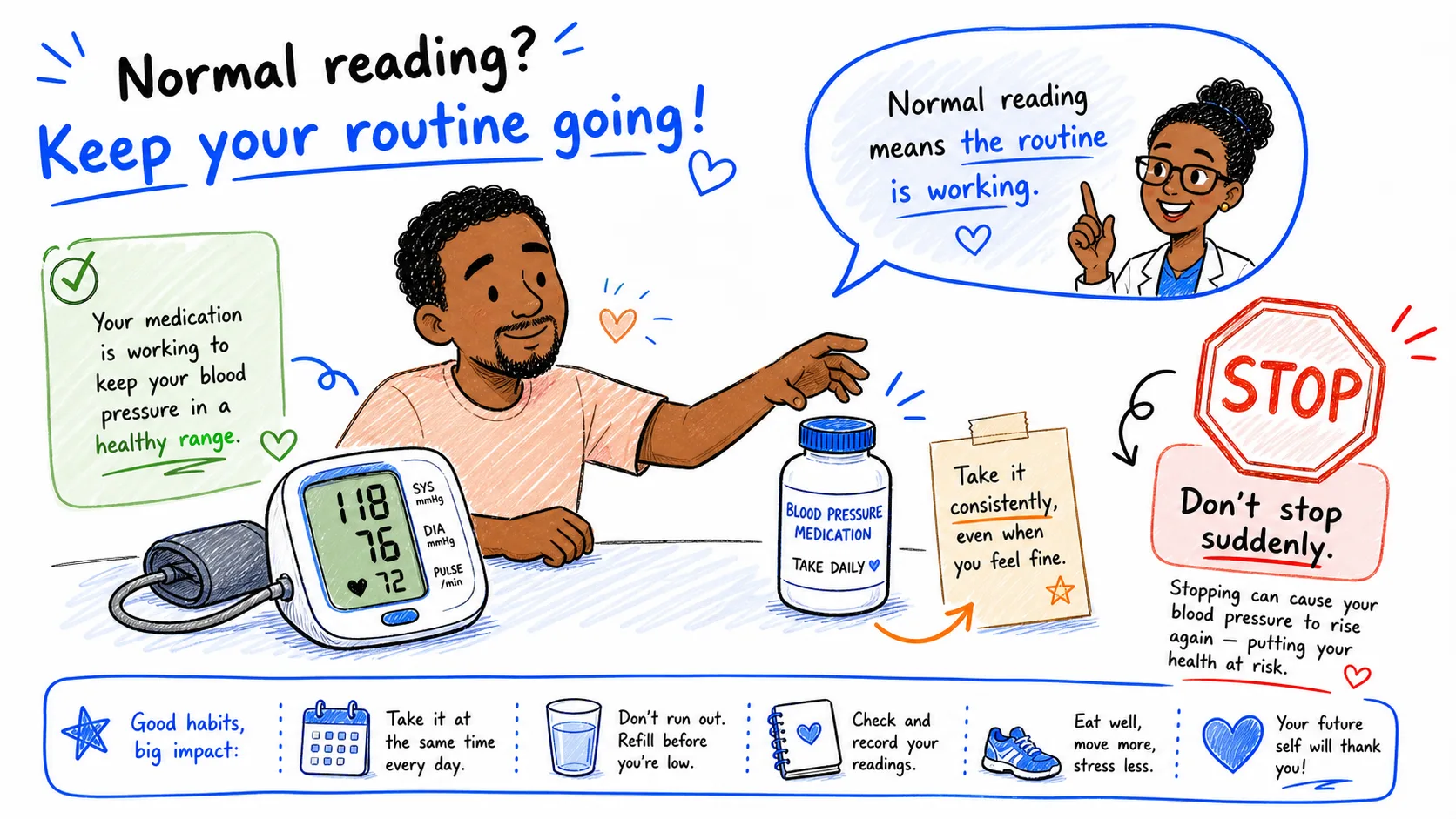
- ✓Normal readings on medication usually mean the medication is controlling your blood pressure.
- ✓Stopping suddenly can cause rebound hypertension, especially with some drug classes.
- ✓A supervised reduction is only considered in selected cases with close monitoring.
- ✓Bring a blood pressure log and medication list before discussing changes with your doctor.
Usually, no, and this is probably the most common question Famasi Care Specialists hear from people who have been on blood pressure medication for months or years. The readings have been stable. The numbers look good. The natural thought is: do I still need this?
A normal blood pressure reading while you're taking medication usually means the treatment is working, but it doesn't prove your blood pressure would stay normal without the medication. Most forms of hypertension don't have a simple one-time cure, so the medication is often what keeps the numbers controlled. If you stop, the underlying condition may still be there, and your readings can rise again.
Here’s why stopping on your own is risky, when a supervised reduction might be considered, and how to have that conversation with your doctor if your situation has changed. For the full routine around readings, medication, refills, and caregiver support, also read our comprehensive guide for managing high blood pressure.
What can happen if you stop blood pressure medication suddenly
Stopping blood pressure medication abruptly is dangerous. The risks depend on which medication you're taking, but several classes of drugs can cause rebound hypertension — a sudden, dangerous spike in blood pressure — if stopped suddenly.
Beta-blockers such as bisoprolol, metoprolol, atenolol, and propranolol are particularly risky to stop abruptly. These medications slow your heart rate and reduce the force of your heart's contractions. If you stop suddenly, your heart rate can jump, your blood pressure can surge, and in some cases you may experience chest pain, irregular heartbeat, or even a heart attack. The risk is highest in the first 24-72 hours after the last dose.
Clonidine and other central alpha-agonists can cause severe rebound hypertension if stopped suddenly. Blood pressure can rise to dangerous levels within hours.
ACE inhibitors such as lisinopril and enalapril, and ARBs such as losartan and valsartan, are less likely to cause dangerous rebound effects, but stopping them still allows blood pressure to return to its previous level within days to weeks.
Calcium channel blockers such as amlodipine and nifedipine also allow blood pressure to rise gradually after stopping, though the increase may take 1-2 weeks to become noticeable.
Don't stop any blood pressure medication without medical supervision. Even medications that don't cause dangerous rebound effects can allow your blood pressure to rise again. Over time, that raises your risk of stroke, heart attack, kidney damage, and vision loss.
When a doctor may consider reducing or stopping blood pressure medication
In carefully selected cases, a doctor may agree to a supervised trial of reducing or stopping blood pressure medication. This is never a decision you make on your own. It requires specific conditions and close monitoring.
The most useful research on this question comes from studies where patients stopped antihypertensive medication under supervision. A 2017 systematic review found that about 40% of selected patients remained below the study threshold for restarting treatment at 1 year. That doesn't mean 40% of people can safely stop on their own. It means some people, chosen carefully and monitored closely, may be able to reduce or stop treatment for a time.
The same review found that fewer people stayed below the restart threshold over longer follow-up. Even in a carefully selected group, many people eventually need to restart medication.
Your doctor may consider a supervised reduction or trial off medication if all of the following apply:
- Your blood pressure has been consistently well-controlled for at least 1 year.
- You've made significant, sustained lifestyle changes. This includes substantial weight loss if you were overweight, a consistent low-sodium diet, regular exercise, reduced alcohol intake, and effective stress management.
- You don't have evidence of organ damage from hypertension: no history of stroke, heart attack, heart failure, kidney disease, or vision problems related to high blood pressure.
- You're willing and able to monitor your blood pressure closely during any trial period, typically checking daily for the first few weeks and regularly after that.
- You understand that restarting medication is likely and not a failure.
Even if all these conditions are met, your doctor may still recommend continuing medication if your overall cardiovascular risk profile suggests that the benefits of treatment outweigh the benefits of stopping.
How to ask your doctor about lowering your blood pressure medication safely
If you believe your situation has changed and you want to discuss reducing or stopping your medication, the way you approach the conversation matters. Doctors are more likely to consider a supervised trial if you come prepared with data rather than a request based on a feeling.
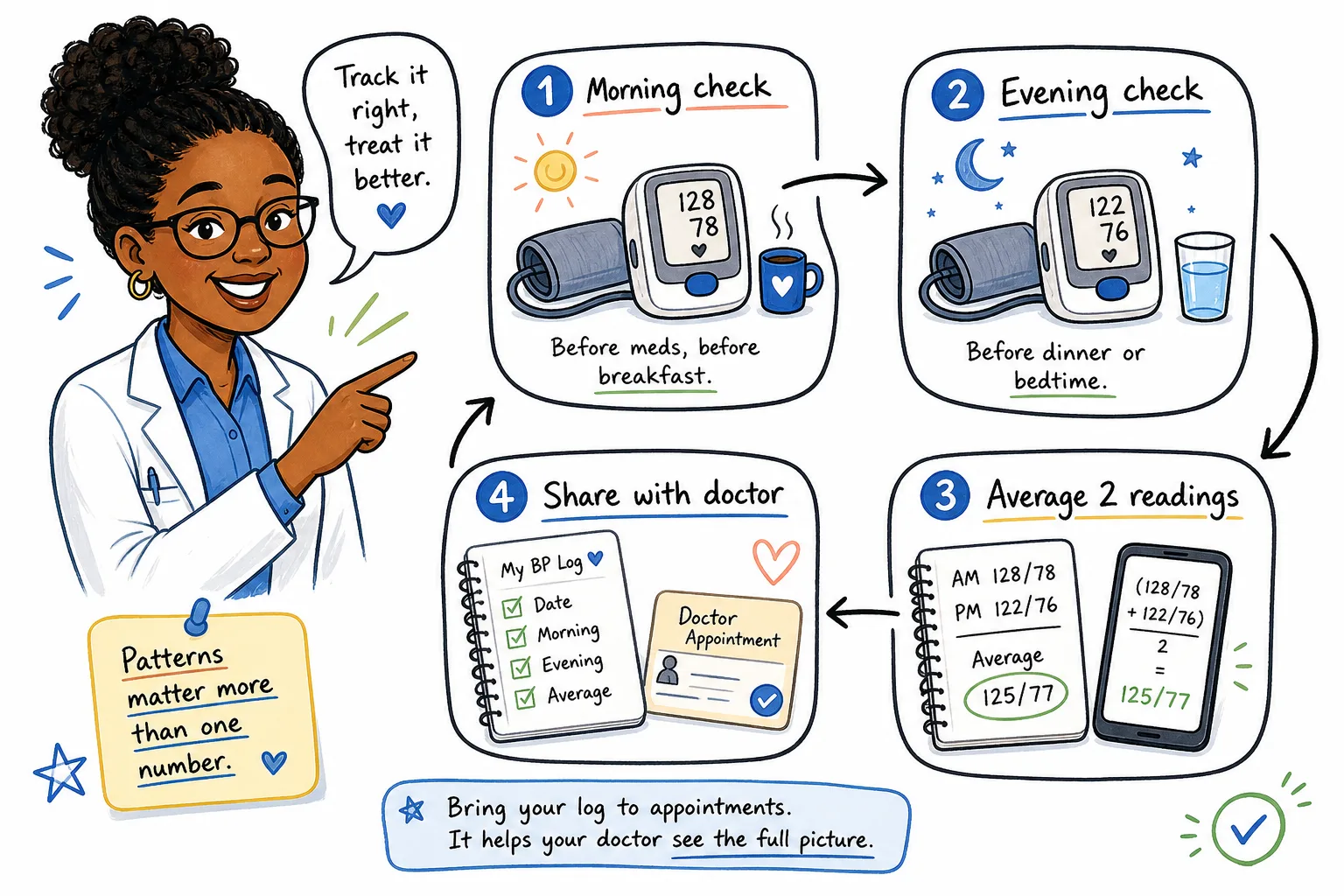
Prepare your home blood pressure log. Bring at least 3 months of readings that show consistent control. The log should include dates, times, averaged readings, and context notes. If your readings have been stable across morning and evening checks, weekdays and weekends, and different stress levels, that's useful evidence that your control is real and sustained. If your log is inconsistent, first fix your measurement routine with this guide on checking blood pressure correctly at home.
Document your lifestyle changes. If you've lost weight, changed your diet, started exercising, reduced alcohol, or made other health changes, write them down with dates and approximate measures. "I feel better" is not as useful as "I've lost 8 kg since January, I walk 30 minutes 5 days a week, and I've reduced my salt intake by cooking without seasoning cubes."
List all your medications and supplements. Include prescription drugs, over-the-counter medications, and herbal or traditional remedies. Your doctor needs the full picture to assess whether any interactions or redundancies exist.
Ask the right questions. Instead of saying "I want to stop my medication," try: "My readings have been consistently normal for the past year. I've made these lifestyle changes. Can we discuss whether a dose adjustment or a supervised trial off medication might be appropriate?" This frames the conversation as a shared medical decision, not a demand.
What not to do: Never stop your medication to "see what happens" and then report back to your doctor. This is dangerous and wastes the opportunity for a supervised, safe trial. If you've already stopped, tell your doctor immediately. Don't hide it.
Taper slowly, and only with your doctor’s guidance
If your doctor agrees that a trial off medication is appropriate, the process will be gradual. Tapering — slowly reducing the dose over weeks or months — is the only safe way to stop blood pressure medication.
The exact schedule depends on the medication, the dose, and how your body responds. A typical taper for an ACE inhibitor like lisinopril might involve reducing from 40 mg to 20 mg for 2-4 weeks, then to 10 mg for another 2-4 weeks, then stopping while monitoring closely. For a beta-blocker, the taper may be even slower because of the risk of rebound effects.
During the taper, you'll need to:
- Check your blood pressure daily, at the same times each day.
- Record every reading in your log.
- Contact your doctor immediately if readings rise above your target range.
- Restart the medication at the previous dose if your doctor advises it.
- Attend all follow-up appointments, even if your readings look fine.
Some doctors prefer not to taper to zero but rather to a very low maintenance dose. This may provide most of the benefit with fewer side effects. The goal is the lowest effective dose that keeps your blood pressure controlled. Stopping at all costs isn't the goal.
Safer options to discuss before you stop your medication
Before you stop, ask what can be changed. Your doctor or pharmacist may be able to adjust the brand, dose, timing, refill cycle, delivery plan, or medication class without putting you through the risk of stopping suddenly.
Start with the practical problem in front of you. Medication too expensive? Ask about generics, lower-cost brands, HMO coverage, or a refill plan that helps you avoid last-minute pharmacy runs. Tired of looking for stock every month? Ask whether your refill can be planned ahead.
Side effects are worth discussing directly. Ask whether the dose, timing, or drug class can be changed. Feeling tired, dizzy, swollen, or sexually affected by medication doesn't mean your only option is to stop. It may mean your treatment needs adjusting.
Lifestyle changes can also change the conversation. After weight loss, diet changes, exercise, or reduced alcohol, ask whether your doctor can review your dose. That's safer than quietly self-weaning because you feel fine.
Herbal and traditional remedies are also heavily promoted as alternatives to prescription treatment. Some claim to "cure" hypertension permanently. The evidence for these claims is weak, and herbal products can interact with prescription drugs or contain unlisted ingredients. If you use any herbal remedy, tell your doctor or pharmacist before changing your medication.
Stopping should be the last option, not the first.
If you stay on blood pressure medication, your refill plan still matters
The best way to keep your blood pressure controlled is to take your medication consistently, without gaps. Missed doses create fluctuations in your blood pressure that make it harder for your doctor to assess whether your treatment is working. They also increase your risk of cardiovascular events.
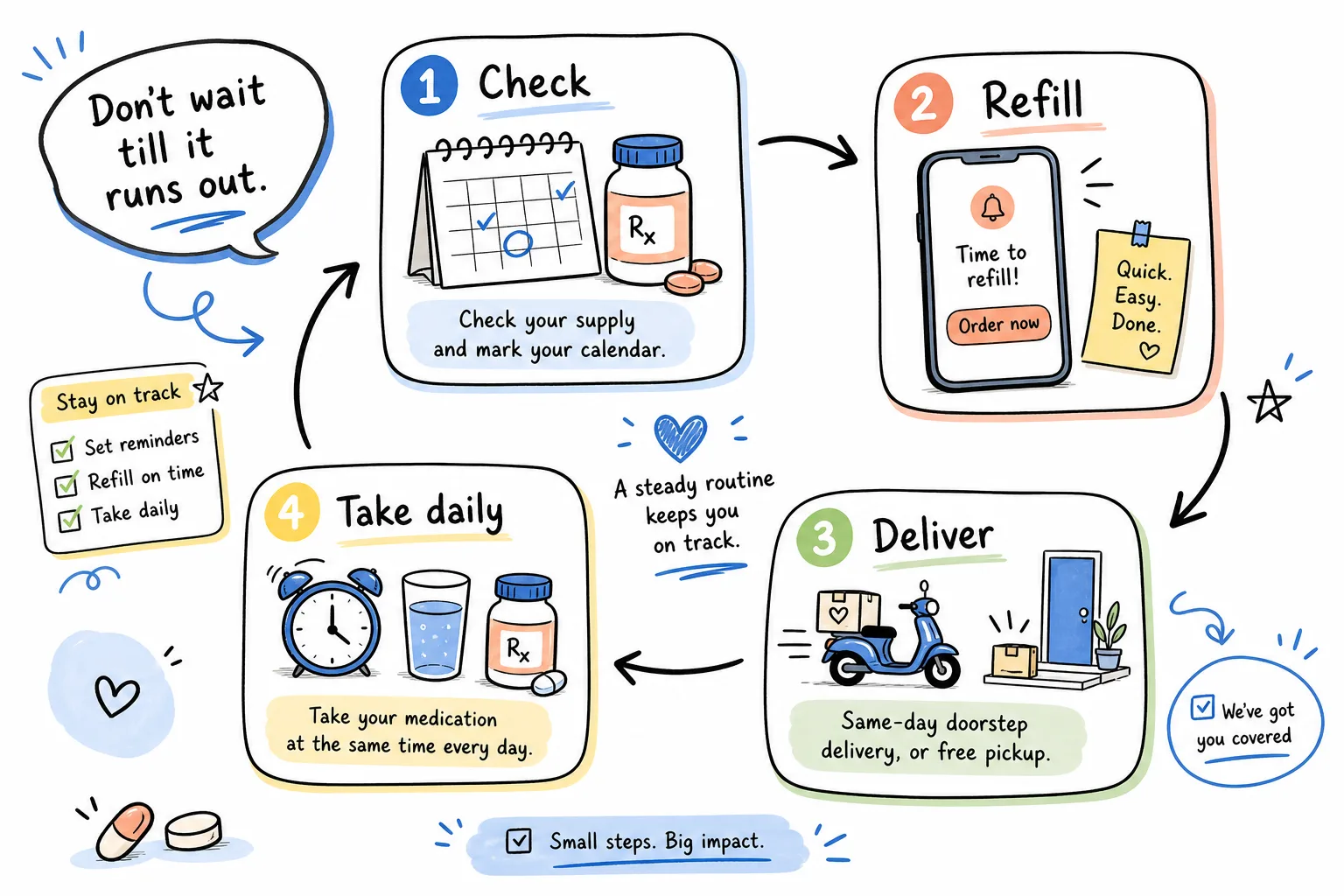
A consistent refill routine supports consistent treatment. Set a reminder to refill when you've got 7 days of medication left, not when the bottle is empty. Link your refill to a fixed monthly event, such as payday or a bill payment. If you manage medication for a parent or partner, keep a shared list of their medications, doses, and refill dates.
Some services allow you to set up recurring deliveries so your medication arrives before you run out. This removes the mental load of remembering and reduces the risk of gaps caused by stock shortages or travel. If remembering refills is the weak point, build a monthly refill routine for blood pressure medication before you consider stopping treatment.
Summary: What to Take Away From This Guide
- A normal reading on medication means the treatment is working, not that you're cured. Most people with hypertension need long-term treatment.
- Never stop blood pressure medication suddenly. Beta-blockers and clonidine in particular can cause dangerous rebound hypertension within 24-72 hours.
- A supervised trial off medication may be appropriate in carefully selected cases: well-controlled for at least 1 year, significant lifestyle changes, no organ damage, and close monitoring.
- A 2017 systematic review found that about 40% of selected patients stayed below the restart threshold at 1 year, but only with careful selection and follow-up.
- If you want to discuss stopping, come prepared with at least 3 months of home readings and a documented list of lifestyle changes.
- Tapering is the only safe approach. It should be done gradually over weeks or months with daily monitoring and regular doctor contact.
- Cost, side effects, and refill stress are real problems, but stopping medication isn't the only way to deal with them. Ask about safer adjustments first.
- Herbal remedies promoted as hypertension cures lack robust evidence and may interact dangerously with prescription medications.
Common Questions About Stopping Blood Pressure Medication
Can I stop BP medication if my reading is normal?
What happens if I stop blood pressure medication suddenly?
Can lifestyle changes help me reduce my BP medicine?
What should I ask my doctor before reducing BP medication?
What if I want to stop because of side effects or cost?
References
- van der Wardt V, et al. Withdrawal of antihypertensive medication: a systematic review. Journal of Hypertension. 2017;35(9):1742-1749. PubMed.
- American Heart Association. Managing High Blood Pressure Medications.
- American Heart Association. Types of Blood Pressure Medications.
- Mayo Clinic. High blood pressure: diagnosis and treatment.
- Nigerian Hypertension Society. Guidelines for the Management of Hypertension in Nigeria 2020.
- World Health Organization. Hypertension Nigeria 2023 country profile.